Artificial Intelligence
Mathematical and computational foundations for intelligent systems, automated reasoning, planning, and algorithmic decision processes.

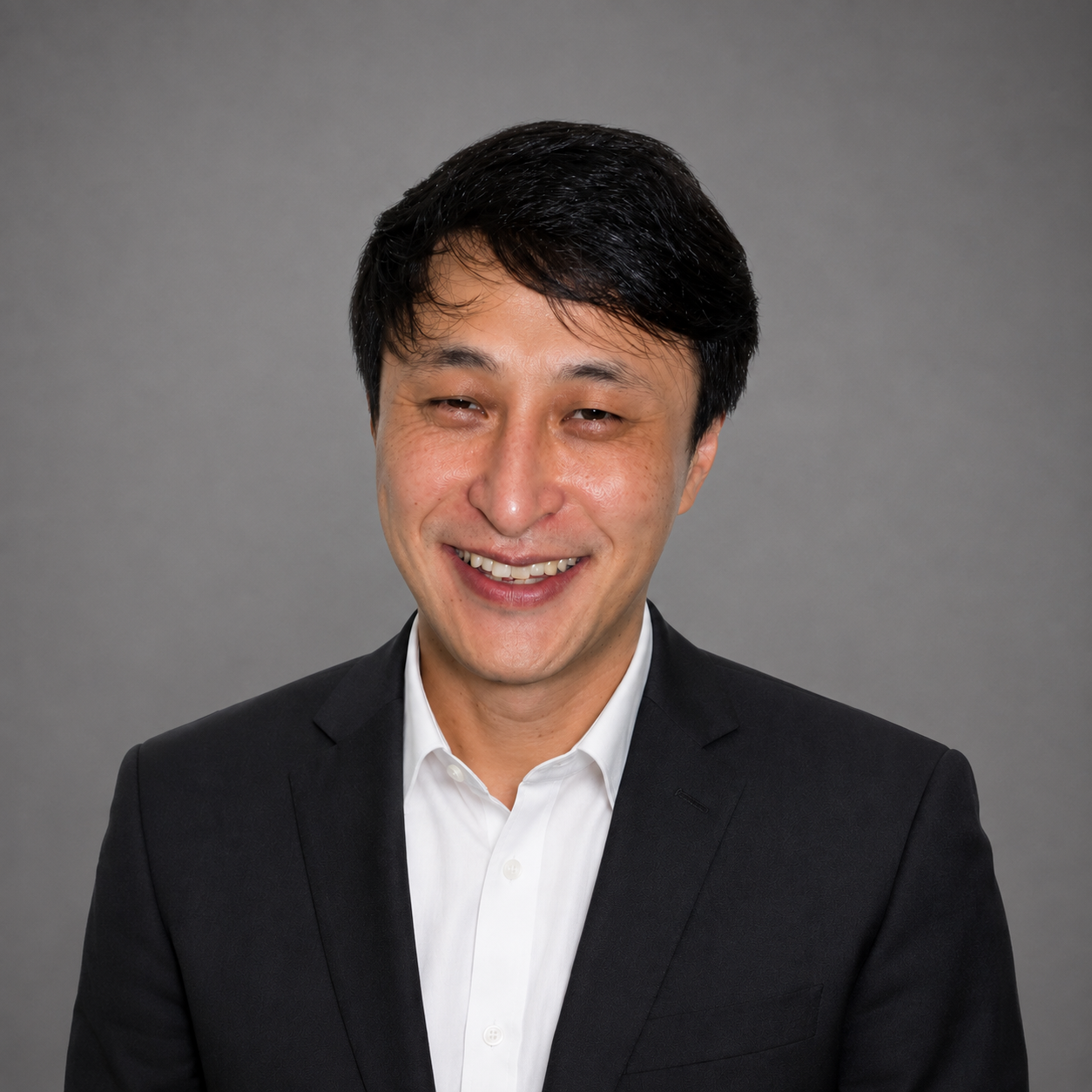
Daniel Kikuti is a computer scientist, researcher, and university professor whose academic work spans artificial intelligence, algorithms, optimization, decision sciences, operational research, and computational modeling. He is currently a faculty member in the Department of Informatics at the State University of Maringá (UEM), Brazil.
His research has a strong theoretical and computational foundation in decision-making under uncertainty, particularly in situations in which probability estimates or preferences cannot be represented by a single complete ordering. His work investigates mathematical and algorithmic approaches capable of representing and solving decision problems involving imprecise probabilities, partially ordered preferences, decision trees, and influence diagrams.
His broader academic activities also include algorithm development, combinatorial optimization, operational research, graph-based problems, automated planning, scheduling problems, computational thinking, and computing education.
As an Editorial Board Member of JDHAB, Daniel Kikuti contributes expertise in artificial intelligence, computational methods, algorithms, optimization, and decision sciences.
His background supports the scientific assessment of manuscripts involving computational models, algorithmic methods, automated decision systems, optimization procedures, uncertainty modeling, and artificial intelligence. His role is particularly relevant to the journal's commitment to distinguishing technically sound computational methodology from unsupported or insufficiently validated claims involving artificial intelligence.
Mathematical and computational foundations for intelligent systems, automated reasoning, planning, and algorithmic decision processes.
Decision models involving incomplete information, imprecise probabilities, partially ordered preferences, and alternative criteria for strategy selection.
Development and analysis of algorithms for optimization, operational research, combinatorial problems, graphs, planning, and computational problem solving.
Computational approaches to automated planning, scheduling problems, allocation, and algorithmic optimization.
Research involving computer systems, heterogeneous computing environments, monitoring architectures, and practical computational infrastructure.
Algorithmic problem solving, computational thinking, programming education, and educational initiatives connecting computer science with academic and school communities.
His continuing research activities include automated planning and algorithms for scheduling problems, together with mathematical and computational approaches to optimization and decision-making.
These research directions extend his earlier investigations of incomplete preferences and uncertain decision environments toward broader problems in artificial intelligence, operational research, and algorithmic optimization.
In addition to theoretical and algorithmic research, Daniel Kikuti participates in educational and extension activities aimed at strengthening computational thinking, programming, and algorithmic problem-solving skills.
His academic activities also include training and mentoring related to algorithms, programming competitions, and problem-solving methodologies, reinforcing the connection between theoretical computer science and practical computational education.
Daniel Kikuti's contribution to JDHAB expands the journal's interdisciplinary expertise beyond biomedical application areas by providing a foundation in computer science and formal decision theory.
His expertise is particularly relevant when evaluating whether computational or artificial-intelligence methods are appropriately defined, whether algorithmic procedures are reproducible, whether uncertainty has been adequately represented, and whether the conclusions produced by computational systems are supported by the methods and evidence presented.