
Leonardo Pestillo de Oliveira, PhD
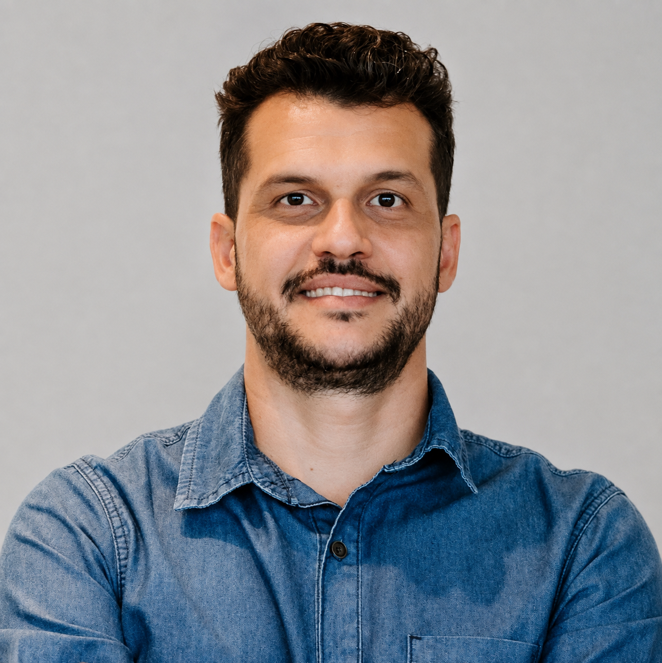
Leonardo Pestillo de Oliveira, PhD
Professional Profile
Leonardo Pestillo de Oliveira is a psychologist, researcher, professor, and scientific editor whose academic trajectory integrates Social Psychology, Health Promotion, research ethics, bioethics, psychometrics, behavioral science, and Global Health.
His academic formation combines Psychology and Physical Education with doctoral training in Social Psychology and international experience in Canada and the United States. He completed his PhD at the Pontifical Catholic University of São Paulo (PUC-SP), including an international research period at the Université du Québec à Trois-Rivières, and subsequently completed postdoctoral research in Global Health at Duke University.
His research encompasses psychological and behavioral dimensions of health, health promotion, mental health, sport psychology, instrument validation, cross-cultural adaptation, psychometric assessment, global health, digital technologies, and ethical questions arising from contemporary health research and practice.
Alongside his scientific activity, Oliveira has accumulated experience in research governance, human-research ethics, scientific publishing, postgraduate education, peer review, and institutional research management.
This combination of behavioral science, methodological assessment, ethics, editorial experience, and research governance provides an interdisciplinary foundation for his role at the Journal of Digital Health and Advanced Biomaterials (JDHAB).
Research Ethics, Bioethics and Human Research
An important dimension of Oliveira's academic trajectory concerns ethical questions arising from research involving human participants, health care, psychology, emerging technologies, and vulnerable populations.
His institutional experience includes service within the Research Ethics Committee (CEP) of UniCesumar and participation in formal training and scientific activities associated with the Brazilian CEP/CONEP system.
This experience provides practical familiarity with ethical review of human-subject research, informed consent, participant protection, proportionality between risks and benefits, confidentiality, autonomy, vulnerability, and the responsibilities of researchers and institutions.
His scholarly work in bioethics extends these concerns to contemporary questions involving artificial intelligence, mental health, disability, digital privacy, health technologies, and the social consequences of scientific and technological change.
Research Governance and Scientific Oversight
Oliveira also participates directly in institutional research governance at UniCesumar. He serves as Coordinator of the Research Advisory Committee (CAPEC), a multidisciplinary body associated with the institutional management of scientific research, technological development, innovation, and research programs.
This role involves an environment in which scientific projects, institutional research structures, research-development programs, funding mechanisms, and academic governance intersect.
His experience across research committees, postgraduate education, ethics review, and scientific publishing supports an integrated perspective on responsible research conduct that extends from project development to dissemination of scientific results.
Scientific Editing and Editorial Governance
Scientific publishing represents another important component of Oliveira's academic activity. He currently serves as Editor-in-Chief of Saúde e Pesquisa, the interdisciplinary health journal published by UniCesumar.
His editorial experience includes manuscript evaluation, coordination of peer-review processes, interaction with authors and reviewers, editorial decision-making, and participation in the governance of scholarly communication.
This practical editorial background is particularly relevant to issues involving transparency, authorship responsibility, conflicts of interest, ethical oversight, peer-review integrity, and the distinction between scientific disagreement, methodological limitation, and potential breaches of research or publication ethics.
Psychometrics, Measurement and Instrument Validation
Oliveira's research includes psychometric assessment, cross-cultural adaptation, measurement validity, and evaluation of instruments used in behavioral, psychological, and health research.
His international collaborations have included studies evaluating cognitive and behavioral instruments across languages and cultural settings, with particular attention to measurement properties, construct validity, reliability, and applicability in populations for which instruments were not originally developed.
This methodological experience is important for scientific interpretation because the validity of conclusions in behavioral and health research depends not only on statistical analysis but also on whether the instruments used adequately measure the intended constructs in the population under investigation.
Global Health and International Research Collaboration
Oliveira's international scientific trajectory includes postdoctoral research in Global Health at Duke University and continuing collaboration with international research networks.
He participates in research connected with the Global Emergency Medicine Innovation and Implementation (GEMINI) network, which brings together investigators working on global health, health measurement, digital technologies, implementation research, and health-system challenges.
Collaborative studies have included psychometric adaptation and validation of cognitive and behavioral instruments, research involving alcohol-related health outcomes, and methodological work conducted across different cultural and health-system contexts.
This international experience contributes to a broader understanding of how cultural context, language, measurement, access to care, and health systems can affect the design and interpretation of scientific research.
Digital Health, Artificial Intelligence and Bioethics
More recently, Oliveira's research has addressed ethical questions generated by the increasing integration of artificial intelligence and digital technologies into health care and psychological practice.
His scholarly work has examined bioethical questions associated with artificial-intelligence systems used in health, including autonomy, privacy, confidentiality, professional responsibility, technological limitations, human oversight, and the boundaries between digital assistance and professional decision-making.
His research has also addressed digital privacy and vulnerability in the context of social-media practices involving children, illustrating how technological innovation may create ethical concerns that extend beyond conventional clinical settings.
These themes are particularly relevant to contemporary editorial governance because emerging digital and AI-assisted research requires clear distinction between technological capability, scientific validation, ethical acceptability, and responsible human decision-making.
Psychology, Sport and Health Promotion
Oliveira's broader research trajectory is rooted in Psychology, Sport Psychology, behavioral science, and Health Promotion.
His work has addressed motivation, mental health, behavioral assessment, physical activity, sport, health-related behavior, psychosocial interventions, and the relationship between individual and social factors in health.
At UniCesumar, he leads the research group Psychology, Sport and Health (PES), connecting psychological science, behavioral research, health promotion, and postgraduate scientific training.
This background contributes to his ability to assess research in which behavioral outcomes, self-reported measures, psychological constructs, and human responses form part of the evidence supporting health-related conclusions.
Academic and Research Leadership
Oliveira is involved in postgraduate education, research supervision, institutional scientific committees, collaborative research networks, and the development of health-promotion research at UniCesumar and ICETI.
His activities combine the training of researchers with scientific project development, methodological assessment, interdisciplinary collaboration, research governance, and dissemination of peer-reviewed scientific knowledge.
This combination of scientific and institutional responsibilities contributes to a broad perspective on the research lifecycle, from study conception and ethical review to analysis, publication, peer review, and scientific communication.
Editorial Role at JDHAB
As Editor for Publication Ethics and Research Integrity at the Journal of Digital Health and Advanced Biomaterials, Leonardo Pestillo de Oliveira serves within the journal's dedicated Editorial Governance and Research Integrity area, contributing to the development and application of standards related to ethical research conduct, publication ethics, transparency, and responsible scientific communication.
His role supports the journal's handling of questions involving human-research ethics, informed consent, authorship, conflicts of interest, disclosure, research transparency, responsible use of artificial intelligence, and other matters in which ethical considerations intersect with scientific publication.
He also contributes an independent perspective when manuscripts or editorial cases require distinction between methodological limitations, scientific disagreement, ethical concerns, and potential research-integrity issues.
His experience in scientific publishing, institutional research governance, human-research ethics, psychology, and health promotion provides an interdisciplinary foundation for JDHAB's research-integrity and editorial-governance framework.
This governance role is structurally distinct from routine editorial operations and complements, without replacing, the scientific decision-making responsibilities of the Editor-in-Chief, Deputy Editor-in-Chief, and Associate Editors. This separation helps preserve appropriate boundaries among scientific assessment, ethical oversight, methodological evaluation, and administrative workflow.
Research and Scholarly Focus
Selected Scientific Contributions
Contribution to the JDHAB Scientific Scope
Oliveira's profile contributes a distinct human-research, behavioral, ethical, and methodological dimension to the multidisciplinary structure of JDHAB.
His expertise is particularly relevant when research involving digital health, clinical technologies, artificial intelligence, behavioral outcomes, human participants, or biomedical innovation raises questions that cannot be resolved through technical performance data alone.
His background in psychometrics also strengthens the evaluation of studies relying on questionnaires, psychological constructs, patient-reported outcomes, cross-cultural instruments, and other measurement tools in which evidence of validity and reliability is essential to scientific interpretation.
His experience in human-research ethics and institutional research governance contributes to the journal's capacity to evaluate whether studies involving participants are appropriately designed, ethically documented, transparently reported, and interpreted within the boundaries established by the available evidence.
Finally, his scientific work on artificial intelligence, digital privacy, and bioethics provides a particularly relevant perspective for JDHAB as the journal expands its Digital Health pillar while maintaining explicit commitments to human oversight, research integrity, transparency, and responsible scientific innovation.