Professional Profile
Marlene Gonçalves Curty is a librarian, educator, author, and specialist in Information Science and scientific editorial practices. Her professional trajectory encompasses research methodology, scientific documentation, technical standardization, scholarly communication, information organization, and scientific publishing.
Her academic formation combines Library Science, Letters, specialized training in higher-education libraries, and a Master's degree in Information Science. This interdisciplinary background provided the foundation for a career dedicated to the organization, retrieval, standardization, interpretation, and communication of scientific information.
For much of her professional career, she worked within the academic environment of the State University of Maringá (UEM), contributing to information services, academic libraries, scientific documentation, methodological guidance, research training, and support for scholarly production.
Her professional trajectory subsequently expanded into technical standardization, scientific publishing, editorial consulting, academic writing, computerized information systems, methodological education, and the development of practical resources for researchers and authors.
Her current work continues this trajectory through methodological publications and structured research tools that connect traditional principles of scientific rigor with contemporary research environments, digital documentation, and emerging challenges in scholarly communication.
Within the Journal of Digital Health and Advanced Biomaterials (JDHAB), this background provides specialized expertise in research methodology, scientific documentation, editorial standards, bibliographic consistency, metadata quality, and indexing preparedness.
Information Science and Scientific Documentation
Curty's academic and professional identity is rooted in Information Science and Library Science, with particular attention to the organization, retrieval, documentation, and communication of academic and scientific information.
Her graduate training in Information Science reinforced an academic perspective concerned with information behavior, information flows, academic information environments, and the relationship between access to reliable information and knowledge production.
A principle that has remained consistent throughout her professional trajectory is that scientific information must not only be generated. It must also be organized, identifiable, retrievable, understandable, standardized, preserved, and communicated in forms capable of supporting research, education, evaluation, citation, and future reuse.
Her work therefore connects traditional library and information services with scientific documentation, bibliographic organization, information retrieval, user education, scholarly communication, and editorial systems.
Technical Standardization and ABNT
A particularly significant component of Curty's professional trajectory was her participation in Brazilian technical-standardization activities as an institutional representative of the State University of Maringá in activities associated with the Brazilian Association of Technical Standards (ABNT).
This experience placed her at the interface between the practical needs of researchers, librarians, academic institutions, and the national standards governing scientific and technical documentation.
Her publications, teaching activities, and professional practice have addressed the interpretation and application of standards involving scientific articles, citations, references, academic works, dissertations, theses, and other components of formal scholarly communication.
Her work on scientific articles has specifically addressed structural and documentary requirements associated with ABNT standards, including NBR 6022.
This experience contributed to a professional perspective in which standardization is not understood merely as formatting. Consistent documentation contributes to identification, interoperability, retrieval, interpretation, citation, preservation, and exchange of scientific knowledge.
Research Methodology and Scientific Writing
Research methodology and scientific writing constitute central dimensions of Curty's academic and professional work.
Over several decades, she has contributed to the teaching and organization of research projects, academic works, dissertations, theses, and scientific articles, helping students and researchers transform research questions and evidence into coherent scholarly communication.
Her methodological approach emphasizes the relationship between the research problem, objectives, scope, methodological design, organization of evidence, scientific reasoning, clarity of writing, citation practices, bibliographic documentation, and manuscript structure.
Rather than treating scientific writing as a final stage of formatting, her work approaches communication as an integral part of the research process. The structure of a scientific text should reflect the reasoning, methodological decisions, evidence, and limitations underlying the investigation.
This perspective has been disseminated through teaching, academic guidance, books, scientific articles, editorial consulting, lectures, and methodological resources directed toward undergraduate students, postgraduate researchers, health professionals, and scientific authors.
Scholarly Publishing and Editorial Standardization
Scientific publishing represents another major dimension of Curty's professional trajectory. Her activities have included technical standardization, bibliographic organization, manuscript structure, references, scientific writing, editorial documentation, and support for the preparation of scholarly publications.
Her expertise bridges the traditional functions of Information Science with the documentary and organizational requirements of academic journals and scientific publishing.
This includes attention to bibliographic-record consistency, citation practices, references, metadata, article structure, author instructions, editorial documentation, discoverability, information retrieval, and the formal elements required for effective scholarly dissemination.
Her academic work has also examined the scientific article itself as a specific form of communication of research knowledge, reinforcing the importance of coherent and standardized documentary structures for scientific exchange.
Scientific Publishing in Dentistry and Dental Press
Curty developed a longstanding professional relationship with Dental Press International, a scientific and educational publishing organization established in Maringá and historically associated with Dentistry and orthodontic education.
Her activities in this environment included scientific documentation support, editorial standardization, normalization, information organization, and methodological education.
Historical journal mastheads document her participation in normalization activities within Dental Press publications, providing practical experience in the transformation of manuscripts into structured and standardized scholarly records.
Her contribution connected Information Science with dental publishing during a period in which Brazilian scientific journals were progressively incorporating electronic information systems, structured scientific articles, bibliographic databases, and more international forms of scholarly communication.
This experience provided direct familiarity with scientific-journal workflows, references, manuscript organization, bibliographic consistency, technical documentation, editorial standards, and the importance of structured information for database retrieval and indexing.
She also taught research methodology in postgraduate educational environments associated with Dentistry, helping clinicians and postgraduate students organize research projects and develop their academic work toward scientific-article formats.
Information Organization and Digital Documentation
Curty's work in Information Science also includes early experience with computerized information organization, indexing, and retrieval.
In collaboration with Rosely Suguino, she developed work involving the use of MicroIsis for the indexing and retrieval of slide collections, presented at the IX Seminário Nacional de Bibliotecas Universitárias in 1996.
The initiative applied structured fields, descriptors, indexing principles, and searchable database logic to visual and specialized educational resources.
From a contemporary perspective, this work represents an early application of concepts that remain central to digital scientific information: structured metadata, controlled description, indexing, information retrieval, organization of visual documentation, and preservation of access to specialized knowledge.
Academic Teaching and Research Training
Teaching has remained a recurrent component of Curty's professional trajectory.
Her educational activities encompass research methodology, scientific documentation, academic writing, information organization, bibliographic standards, and technical standardization.
Her teaching has served undergraduate students, postgraduate researchers, faculty members, librarians, health professionals, and scientific authors seeking to transform research activities into structured academic and scientific communication.
Particularly within health and dental education, her work has emphasized the transition from research planning to scientific writing, encouraging the organization of academic investigations in forms that can support later publication and dissemination.
This educational trajectory establishes continuity between the earliest phases of scientific reasoning and the later requirements of manuscript preparation, documentation, publication, indexing, retrieval, and scholarly communication.
Books and Methodological Works
Selected Books and Scholarly Contributions
Selected works documenting the evolution of Marlene Gonçalves Curty's contributions to scientific documentation, academic standardization, research methodology, scholarly communication, and contemporary methodological development.
Forthcoming · Pre-release · 2026
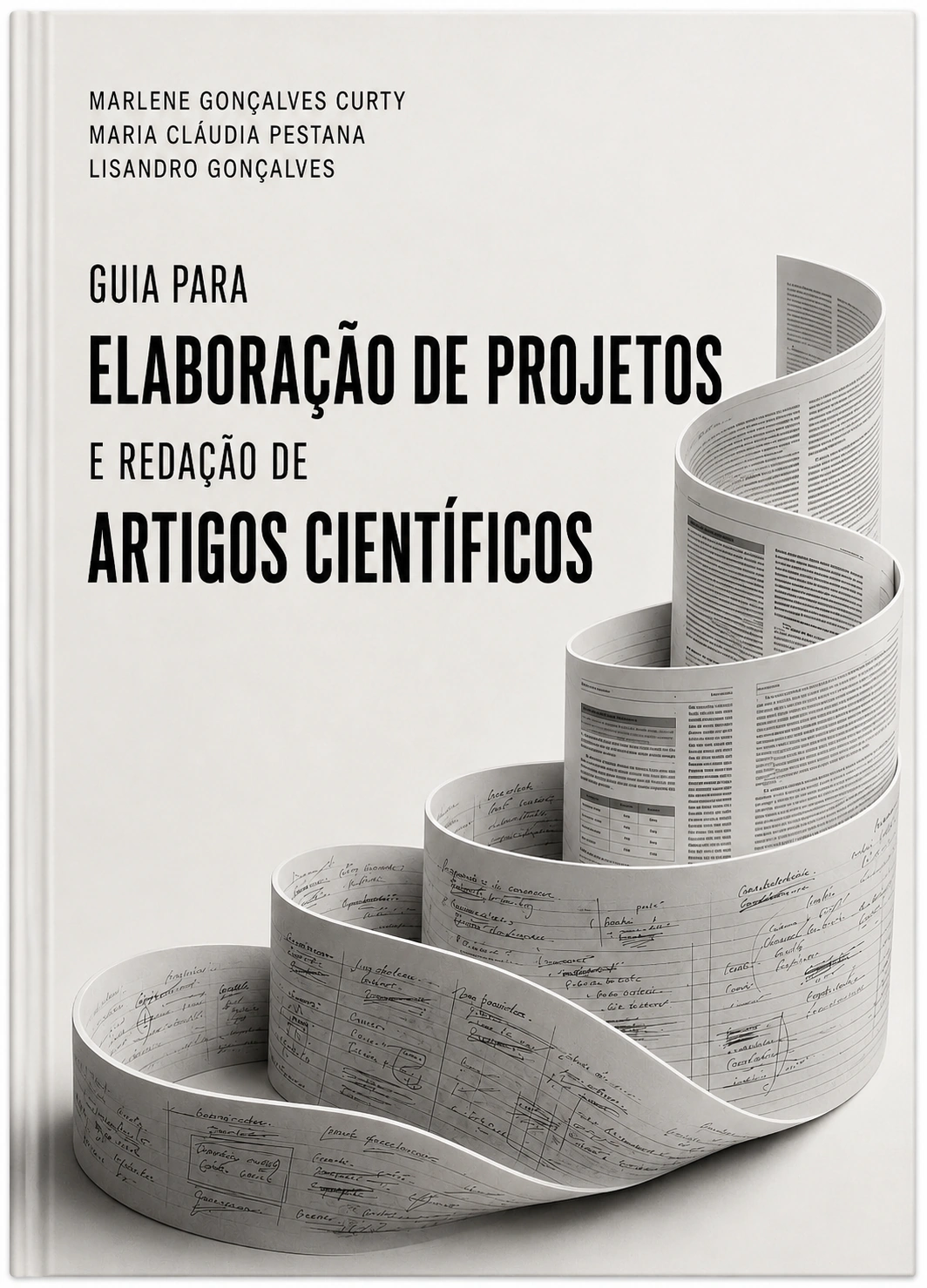
Guia para Elaboração de Projetos e Redação de Artigos Científicos
Marlene Gonçalves Curty · Maria Cláudia Pestana · Lisandro Gonçalves
Contemporary methodological work integrating research-project development, scientific reasoning, manuscript preparation, documentation, and responsible use of emerging digital technologies.
Scientific Writing · 2nd Edition
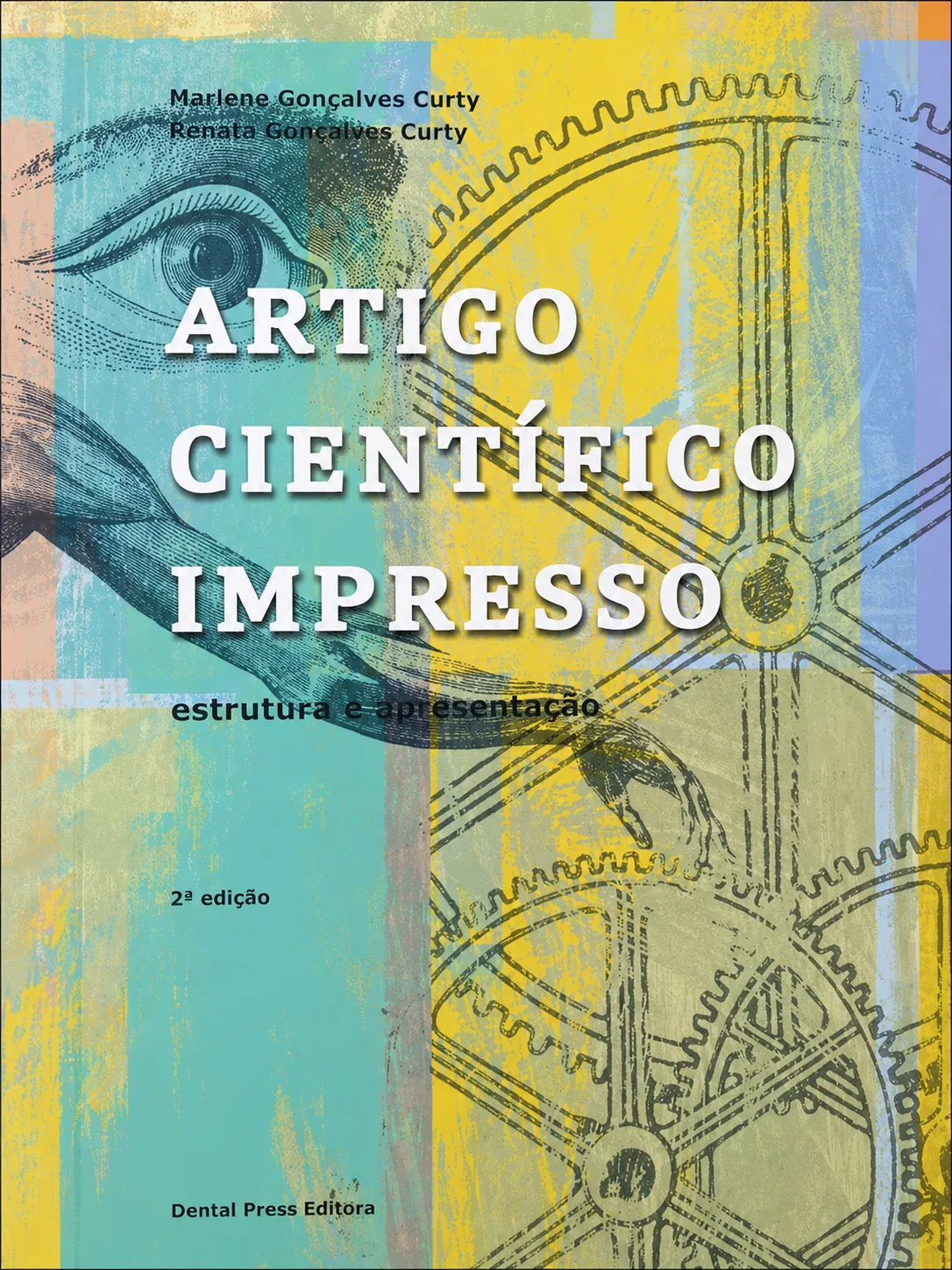
Artigo Científico Impresso: Estrutura e Apresentação
Marlene Gonçalves Curty · Renata Gonçalves Curty
Practical methodological work on scientific-article organization, writing, citations, references, presentation, and editorial standardization.
Dental Press · ISBN 978-85-88020-47-4
Methodological Book · 2006
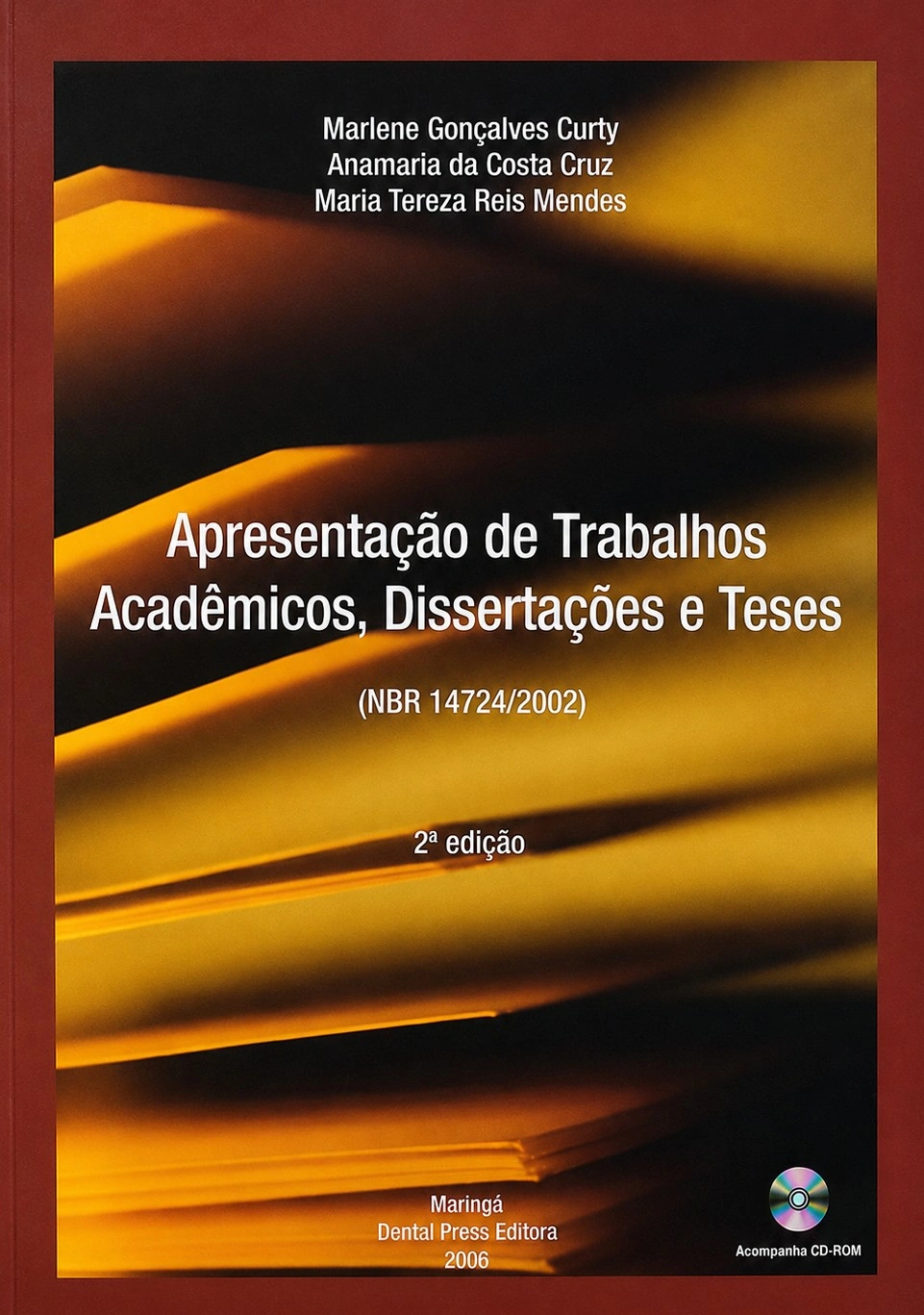
Apresentação de Trabalhos Acadêmicos, Dissertações e Teses
Marlene Gonçalves Curty · Anamaria Costa Cruz · Maria Tereza Reis Mendes
Second edition with CD-ROM, devoted to the standardized organization and presentation of academic works, dissertations, and theses.
Dental Press International · Maringá, Paraná · 2006 · vol. 1 · 118 p.
Academic Standardization · 2002
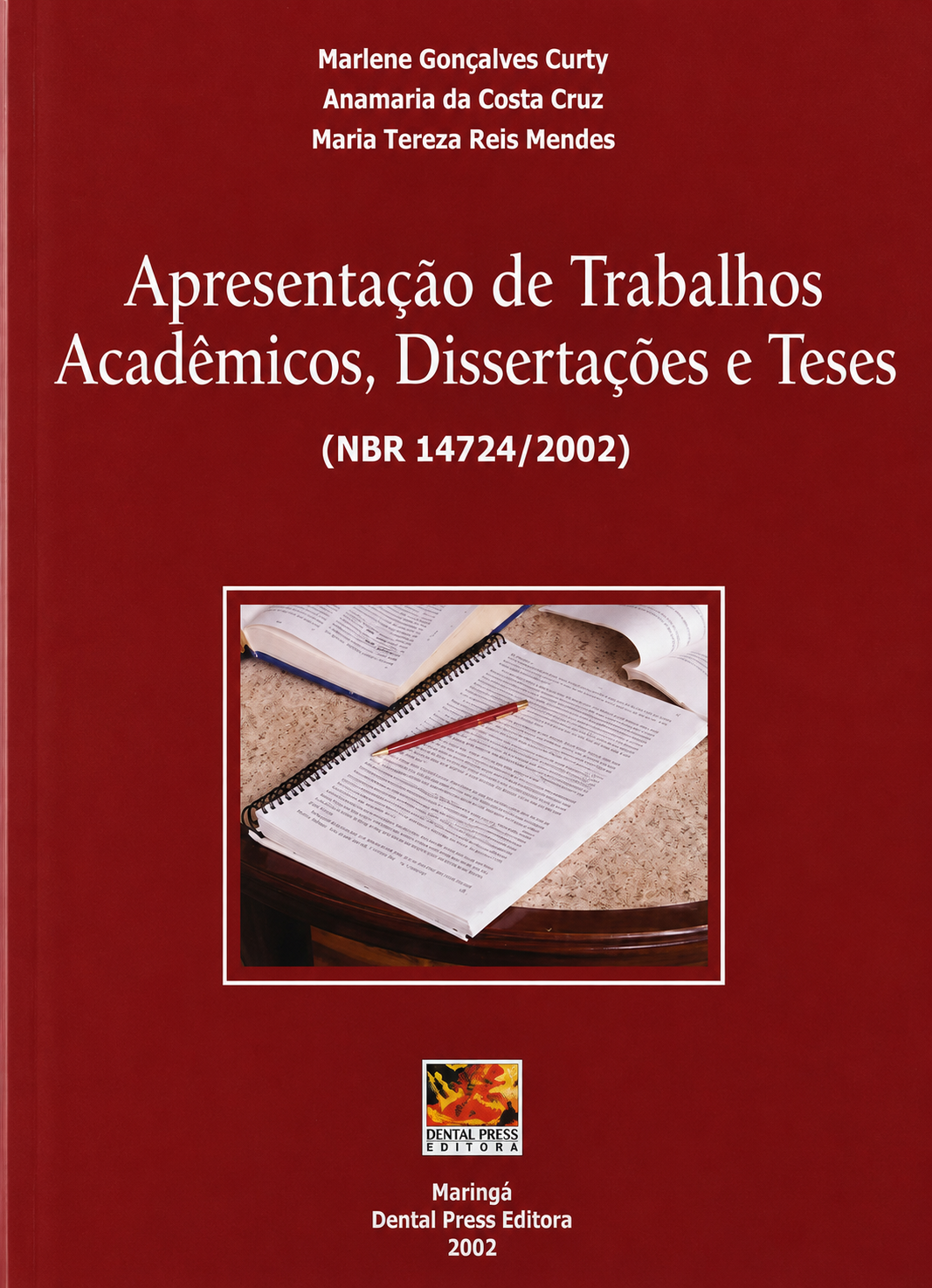
Apresentação de Trabalhos Acadêmicos, Dissertações e Teses (NBR 14724/2002)
Marlene Gonçalves Curty · Anamaria Costa Cruz · Maria Tereza Reis Mendes
Methodological and documentary reference for organizing academic works, dissertations, and theses according to Brazilian technical standards.
Dental Press Editora · Maringá, Paraná · 2002 · 1st ed. · vol. 1 · 109 p.
Scientific Documentation · 2002
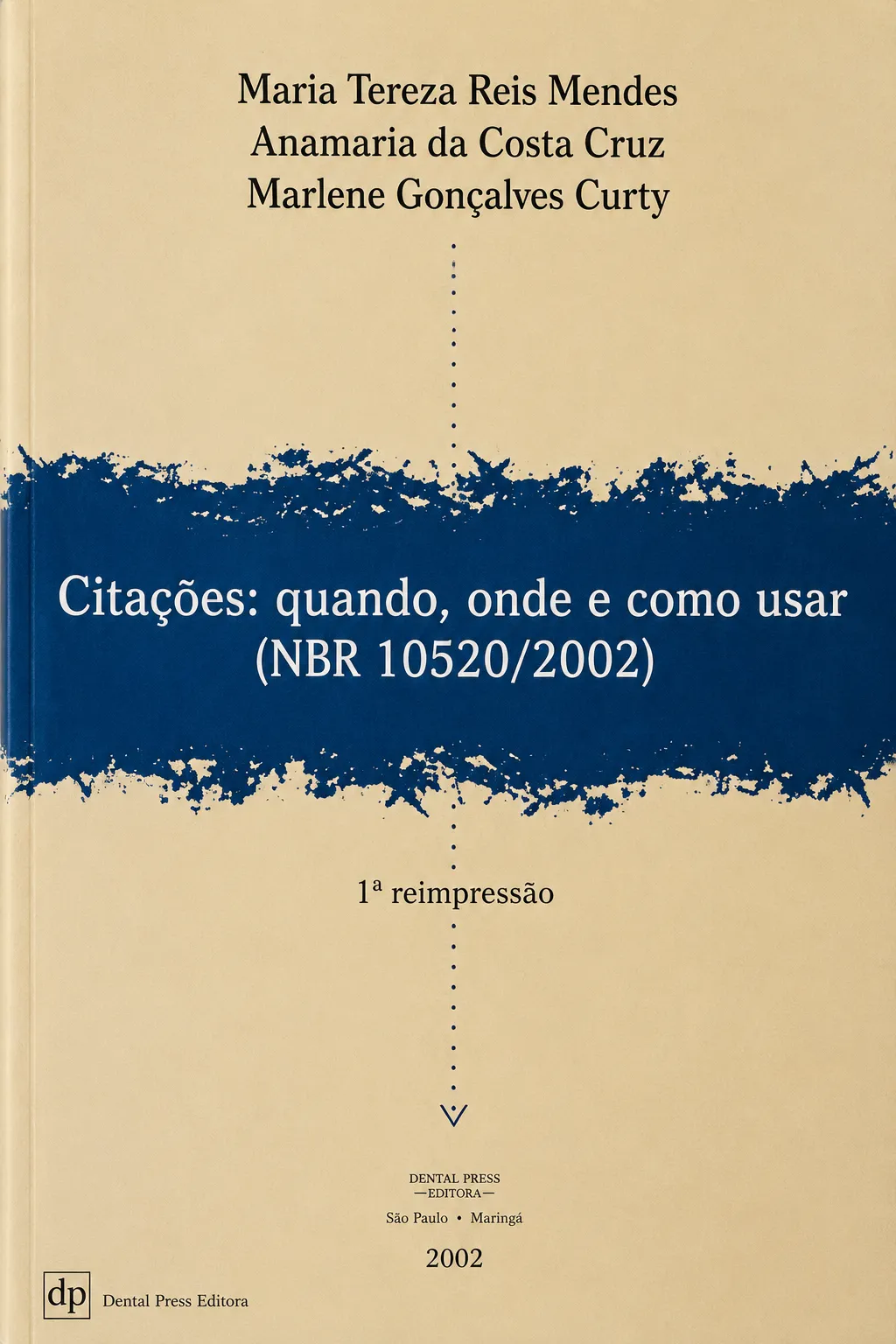
Citações — NBR 10520
Maria Tereza Reis Mendes · Anamaria Costa Cruz · Marlene Gonçalves Curty
Technical publication focused on citation practices and documentary consistency in academic and scientific writing.
Academic Documentation · 2001
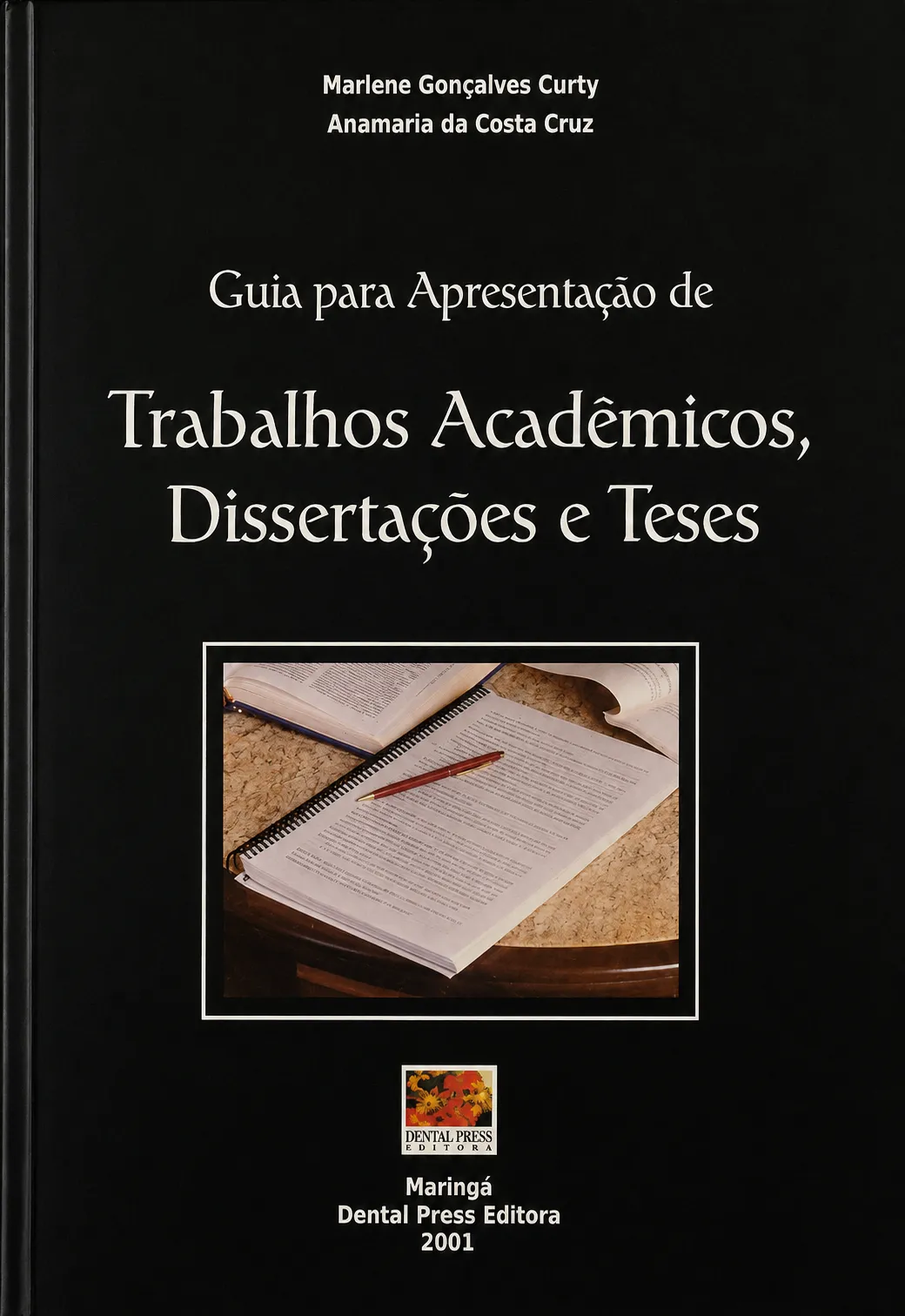
Apresentação de Trabalhos Acadêmicos, Dissertações e Teses
Marlene Gonçalves Curty · Anamaria Costa Cruz
Methodological guide developed to assist students and researchers in structuring and presenting academic works with documentary and technical consistency.
Dental Press Editora · Maringá, Paraná · 2001 · 1st ed. · vol. 1 · 104 p.
Methodological Framework Development
Curty's contemporary methodological work also includes the development of structured tools designed to support one of the most critical phases of scientific investigation: transforming an initial idea into a clearly delimited and investigable research question.
Research Scope and Methodological Framework
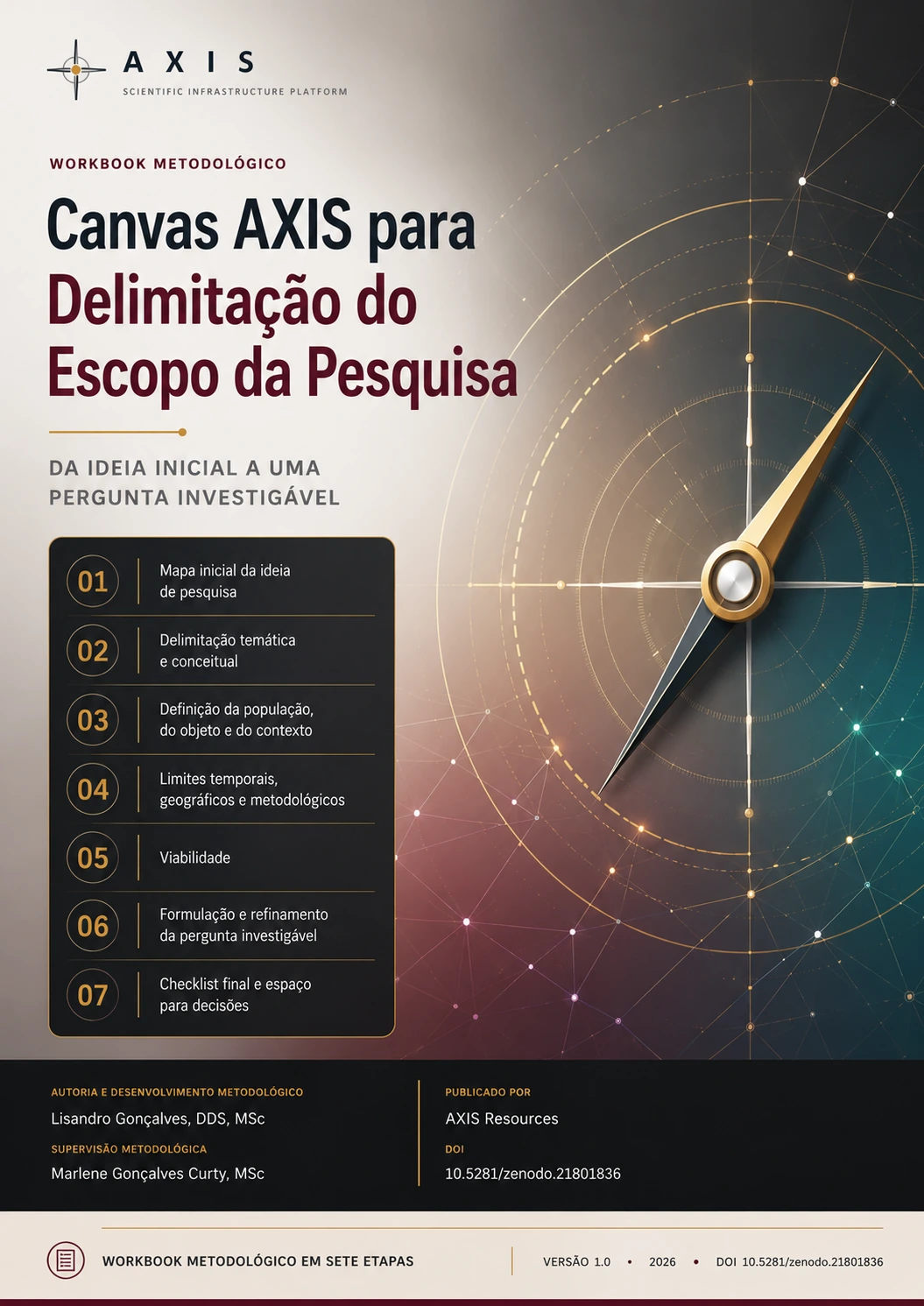
Canvas AXIS para Delimitação do Escopo da Pesquisa: da ideia inicial a uma pergunta investigável
Seven-stage methodological workbook developed to guide researchers from an initial research idea toward a delimited, investigable, and preliminarily feasible research question.
The framework organizes progressive scope refinement, methodological decisions, uncertainties, exclusions, and preliminary feasibility within an explicit and documented reasoning process.
Canvas AXIS extends Curty's longstanding work in research methodology into a contemporary structured framework, combining methodological reasoning with digital implementation and explicit documentation of decisions made during research-scope development.
Contemporary Methodological Innovation
Curty's current work demonstrates the continuity of a methodological trajectory developed over several decades.
Her earlier contributions focused on scientific documentation, technical standardization, information organization, academic writing, and scholarly communication. Her contemporary work extends these principles to the planning and structuring of research itself.
Canvas AXIS represents this transition through a structured methodological process for research-scope delimitation, transforming the development of a research question into a documented sequence of decisions that can be examined, revised, refined, and communicated.
At the same time, the 2026 Guia para Elaboração de Projetos e Redação de Artigos Científicos, coauthored with Maria Cláudia Pestana and Lisandro Gonçalves, updates and expands her longstanding work in research methodology by bringing research-project development and scientific-article preparation into a unified contemporary framework.
The new work also recognizes that contemporary researchers increasingly operate in digital environments and interact with emerging technologies. These developments introduce new methodological responsibilities involving verification, transparency, traceability, documentation, and preservation of human responsibility for scientific decisions.
These contributions demonstrate continuity between Curty's historical expertise in Information Science, scientific documentation, standardization, and scholarly communication and her current involvement in structured and digitally supported approaches to research methodology.
Editorial Role at JDHAB
As Editor for Standards, Research Methodology, and Indexing at the Journal of Digital Health and Advanced Biomaterials, Marlene Gonçalves Curty contributes specialized expertise in scientific documentation, methodological organization, editorial standardization, metadata quality, bibliographic consistency, and indexing preparedness.
Her role supports the development and maintenance of journal standards for manuscript organization, article structure, references, author documentation, editorial policies, templates, and other elements required for coherent scientific communication.
She also contributes a methodological perspective to the journal's editorial infrastructure, supporting consistency among author instructions, article templates, documentation requirements, editorial procedures, and the principles adopted by the journal for transparent scientific reporting.
In relation to indexing, her contribution focuses on the documentary and structural readiness required for international bibliographic visibility: consistent metadata, identifiable authorship, complete affiliations, reliable references, complete publication information, coherent journal policies, and stable editorial documentation.
Her background in Information Science contributes to an understanding of indexing as more than an application to bibliographic databases. Discoverability and long-term scholarly visibility depend on the quality, consistency, interoperability, and retrievability of the scientific record produced by the journal.
Within JDHAB's governance structure, her role is distinct from manuscript scientific decision-making and from the investigation of publication-ethics cases. It provides specialized support for methodology, standards, documentation, metadata, scholarly communication, and indexing infrastructure.
Research and Scholarly Focus
Information Science Information organization, retrieval, scholarly communication, academic information environments, and scientific information services.
Research Methodology Research planning, scope delimitation, scientific reasoning, project development, methodological organization, and research training.
Scientific Documentation Academic works, scientific articles, citations, references, bibliographic organization, document structure, and scholarly communication.
Editorial Standards Manuscript structure, technical standardization, journal documentation, author guidance, templates, and editorial consistency.
Metadata and Indexing Metadata quality, bibliographic identification, discoverability, information retrieval, interoperability, and indexing preparedness.
Contemporary Research Methodology Structured methodological frameworks, research-scope definition, digital research support, documentation of methodological decisions, and emerging challenges in scientific communication.
Selected Scientific and Methodological Contributions
Scientific Communication and Standardization
O artigo científico como forma de comunicação do conhecimento na área de Ciência da Informação
Study of the scientific article as a vehicle for communicating research knowledge, integrating manuscript structure, presentation, citation, references, and principles of technical standardization in scholarly communication.
Marlene Gonçalves Curty and Vera Regina Casari Boccato · Perspectivas em Ciência da Informação · 2005;10(1):94–107 · Web of Science Core Collection
Scientific Writing and Health Communication
Artigo científico: estrutura e apresentação na comunicação em enfermagem
Methodological work addressing the preparation and presentation of scientific articles in health research, with emphasis on manuscript organization, scientific writing, citations, references, and standardized scholarly communication.
Information Retrieval and Digital Documentation
Base de dados para indexação de slides com a utilização do MicroIsis
Early Information Science work involving computerized organization and retrieval of visual information, applying structured fields, descriptors, indexing principles, and database technologies to specialized slide collections.
Marlene Gonçalves Curty and Rosely Suguino · IX Seminário Nacional de Bibliotecas Universitárias · Curitiba, Brazil · 1996
Contemporary Research Methodology
Canvas AXIS para Delimitação do Escopo da Pesquisa: da ideia inicial a uma pergunta investigável
Seven-stage methodological framework supporting the progression from a broad research idea toward a delimited, investigable, and preliminarily feasible research question, with explicit documentation of methodological decisions throughout the process.
Contribution to the JDHAB Scientific and Editorial Scope
Curty's professional and academic profile provides JDHAB with expertise that is structurally distinct from, and complementary to, the journal's clinical, laboratory, materials-science, and digital-health specialties.
Her contribution concerns the infrastructure through which scientific evidence becomes a reliable scholarly record: methodological organization, scientific writing, bibliographic documentation, metadata, references, editorial standards, discoverability, and indexing preparedness.
This expertise is particularly important in a multidisciplinary journal, where manuscripts originating from different scientific traditions must ultimately be represented through coherent publication structures and metadata capable of supporting international retrieval, citation, preservation, interoperability, and evaluation.
Her longstanding experience with scientific documentation and technical standardization supports the development of clear author instructions, coherent article templates, structured editorial policies, reliable bibliographic practices, and consistent publication metadata.
Her contemporary methodological work further extends this contribution toward research-scope definition, structured methodological reasoning, explicit documentation of scientific decisions, and the adaptation of research methodology to contemporary digital environments.
Within the broader governance of JDHAB, her work therefore contributes to continuity between research planning, methodology, manuscript preparation, editorial standardization, bibliographic organization, metadata quality, indexing readiness, and the journal's long-term visibility within scholarly information systems.