
Raqueli Viapiana, DDS, MSc, PhD
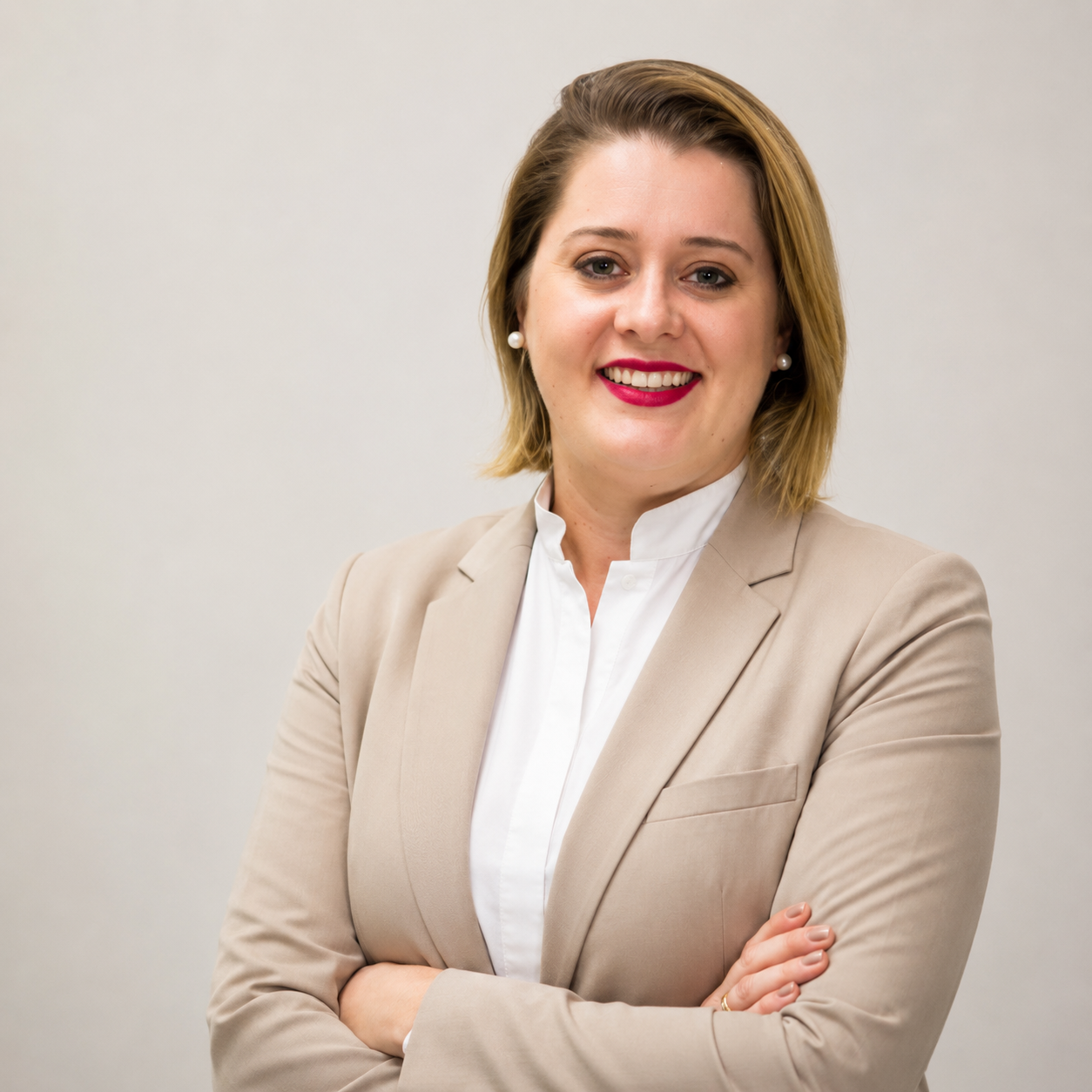
Raqueli Viapiana, DDS, MSc, PhD
Professional Profile
Raqueli Viapiana is a dentist, endodontist, professor, and researcher whose scientific trajectory integrates clinical Endodontics, dental biomaterials, physicochemical characterization, dentin–material interfaces, calcium-silicate-based materials, laser applications, and advanced technologies applied to dental treatment.
She earned her dental degree from the University of Passo Fundo (UPF) in 2006 and completed her MSc in Endodontics at the University of Ribeirão Preto (UNAERP) in 2009.
From 2010 to 2014, she completed her PhD in Endodontics at the Araraquara School of Dentistry, São Paulo State University (FOAr-UNESP). Her doctoral training included an international research period at the University of Malta dedicated to dental biomaterials, experimental methods, and advanced material characterization.
Between 2015 and 2017, she conducted postdoctoral research in Endodontics at FOAr-UNESP, further developing her investigations into endodontic materials, dentin–material interfaces, sealing behavior, physicochemical properties, and clinically relevant laboratory methods.
She serves at Universidade Brasil, where her academic activities include teaching and research related to Dentistry, Endodontics, dental biomaterials, oral histology, and clinical education.
Academic and Research Training
Undergraduate education in Dentistry providing the clinical and scientific foundation for subsequent specialization in Endodontics and dental biomaterials research.
Master's research investigating the effect of 980-nm diode-laser application at different root levels and depths on the microhardness of human intraradicular dentin.
Doctoral research investigating additives and micro- and nanoparticulate radiopacifiers, mechanical properties, bioactive potential, and dentin–cement interfaces in experimental endodontic materials.
International research involving experimental Endodontics, cement chemistry, dental biomaterials, microscopic analysis, and advanced characterization of material–dentin interfaces.
Research expanding investigations into contemporary endodontic materials, root canal sealers, material properties, sealing behavior, and radicular dentin interfaces.
Endodontics and Dental Biomaterials
A major component of Viapiana's research concerns materials used in root canal obturation, endodontic repair, and related clinical procedures. Her investigations include resin-based sealers, Portland-cement-derived materials, calcium-silicate-based systems, experimental formulations, and different radiopacifying agents.
Her work evaluates these materials through parameters such as setting behavior, flow, film thickness, solubility, dimensional stability, radiopacity, pH, ion release, porosity, mechanical properties, chemical composition, and interaction with mineralized dental tissues.
Dentin–Material Interfaces
One of the distinctive components of Viapiana's scientific work is the investigation of the interface between radicular dentin and endodontic materials.
Her research has examined how different formulations interact physically and chemically with dentin, integrating confocal microscopy, scanning electron microscopy, elemental analysis, penetration assessment, and other structural approaches to characterize the contact zone between dental substrates and endodontic materials.
Interfacial adaptation, penetration into dentinal tubules, material homogeneity, elemental distribution, chemical interaction, and the response of the dentin substrate can all influence the interpretation of endodontic material performance.
Calcium Silicate and Bioactive Endodontic Materials
Viapiana has contributed to the development and characterization of calcium-silicate-based materials and experimental cement formulations intended for endodontic applications.
Her research has evaluated Portland-cement-derived systems modified with different radiopacifying agents, including zirconium oxide and niobium oxide in micro- and nanoparticulate forms.
Her work also includes the evaluation of contemporary calcium-silicate root canal sealers and their porosity, sealing behavior, interaction with dentin, and bioactive potential.
Chemical and Physicochemical Characterization
Detailed physicochemical characterization is a recurrent element of Viapiana's research. Her work investigates the relationships among formulation, processing, material structure, chemical behavior, and functional properties.
Experimental approaches have included standardized material testing together with complementary analytical methods for evaluating morphology, elemental composition, volumetric change, surface behavior, porosity, and interaction with biological or mineralized environments.
Imaging and Multimethod Materials Assessment
Viapiana's scientific work incorporates complementary imaging and analytical methods to evaluate material behavior and root canal filling quality.
Her research has included micro-computed tomography, confocal laser scanning microscopy, scanning electron microscopy, elemental analysis, fluid-transport methods, and microsphere-based leakage assessment.
Laser Applications in Endodontics
Laser applications constitute an established component of Viapiana's research trajectory in Endodontics.
Her master's research investigated the effect of a 980-nm diode laser on the microhardness of human intraradicular dentin at different root levels and depths.
Her work in this area supports critical assessment of laser parameters, irradiation protocols, tissue response, measurement methods, and the distinction between technological application and demonstrated clinical benefit.
Thermal Technologies and Root Canal Obturation
Viapiana's work has also evaluated thermal phenomena associated with warm vertical compaction of gutta-percha.
Her research has investigated the influence of root canal sealers on heat transfer to the external root surface during obturation procedures involving a System B heat source.
Clinical Translation and Innovation
In parallel with her academic and laboratory research, Viapiana's professional trajectory includes clinical Endodontics and the management of complex root canal conditions.
The combination of experimental investigation and clinical experience supports a translational perspective in which laboratory findings are considered in relation to therapeutic requirements, procedural limitations, tissue preservation, and clinically meaningful outcomes.
International Academic Experience
During her PhD at the Araraquara School of Dentistry, São Paulo State University (FOAr-UNESP), Viapiana completed an international doctoral research period at the University of Malta.
This period expanded her experience with laboratory methods, microscopic analysis, cement chemistry, dental biomaterials, and the characterization of material–dentin interfaces.
Editorial Role at JDHAB
Raqueli Viapiana has served as Associate Editor for Clinical Dentistry and Dental Biomaterials at the Journal of Digital Health and Advanced Biomaterials since 2026.
She contributes specialized expertise to the evaluation of manuscripts involving Endodontics, dental biomaterials, material–dentin interfaces, calcium-silicate-based systems, root canal sealers, bioactive materials, laser applications, and clinically oriented dental-material research.
Her experience with microscopy, micro-computed tomography, multimethod materials assessment, and interfacial characterization contributes to the critical evaluation of how analytical methods support conclusions about dental material performance.
Research and Scholarly Focus
Selected Scientific Contributions
Contribution to the JDHAB Scientific Scope
Viapiana's scientific profile strengthens both the Clinical Dentistry and Advanced Biomaterials dimensions of JDHAB by connecting Endodontics with dental materials science, physicochemical characterization, interfacial analysis, advanced imaging, laser applications, and clinically oriented research.
Her expertise is especially relevant to manuscripts involving root canal sealers, calcium-silicate materials, bioactive cements, endodontic repair materials, dentin–material interfaces, radiopacifiers, obturation technologies, laser applications, and other technologies designed for interaction with mineralized dental tissues.
By combining experimental materials research, advanced characterization, international scientific experience, laser research, and clinical expertise, Viapiana contributes an important translational perspective to the journal's evaluation of emerging dental materials and technologies.